
Concacaf’s Strategic Move
On September 10, Concacaf made a significant announcement regarding the schedule for the upcoming 2026 Women’s Championship. This tournament will showcase eight of the leading teams in the region and underscores the growing emphasis on women's soccer within the governing body. Tickets for the tournament are currently on sale, indicating a keen interest from fans and stakeholders alike.
Details of the Tournament
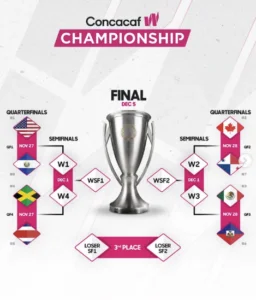
Scheduled from November 27 to December 5, the event will unfold at Texas Health Mansfield Stadium and Shell Energy Stadium, both located in Houston, Texas. Each matchday will host two games, and a single ticket will grant access to both matches. The tournament will culminate in a doubleheader for both the third-place match and the final on December 5. The convenience of back-to-back games is aimed at enhancing the spectator experience, potentially drawing larger crowds to the venues.
Participating Teams
The competitive field includes eight nations: the United States and Canada, entering as top seeds, along with Costa Rica, El Salvador, Haiti, Jamaica, Mexico, and Panama, who earned their places through qualifying rounds. What stands out here is the inclusion of diverse teams, which reflects the increasing competitiveness and development of women’s soccer across Central America and the Caribbean.
The quarterfinals are set to kick off on the tournament's opening day, with Jamaica facing Costa Rica and the defending champions, the USA, taking on El Salvador. The following day's matches will feature Canada against Panama and Mexico against Haiti. The draw was determined based on FIFA rankings from April 2026. If you’re working in this space, you’ll recognize how these alignments can significantly influence the outcomes, setting the stage for both anticipated rivalries and potential upsets.
Key Stakes and Implications
This tournament holds significant stakes for the teams involved. The four winning teams from the quarterfinals will advance to the semifinals on December 1 and automatically qualify for the 2027 World Cup in Brazil. The intensity of competition will increase, given that the two losing teams will have a second chance through a playoff for an additional two World Cup spots. It's a classic case of “win or go home,” but with an added layer of opportunity. In the context of global women’s soccer, this level of competitive pressure is critical for enhancing the quality of play.
Olympic Qualifications
Moreover, the implications extend beyond World Cup qualifications. The finalists and the third-placed team will secure their spots for the 2028 Los Angeles Games. The United States, qualified as hosts, could see the fourth-placed team nab the final Olympic berth, should they manage to finish among the top three. This dynamic fuels a competitive narrative not just for World Cup spots but also for Olympic glory.
Defending Champions in the Spotlight
As the defending champions after their 2022 victory against Canada, the USA will be under pressure to maintain their dominance in the region. Their reputation as a powerhouse in women's soccer adds an extra layer of intrigue. Yet, competition is heating up. Teams like Canada and Jamaica, with their own ambitions, will provide a formidable challenge to the U.S. hopes. The historical context here is crucial: the U.S. has long set the benchmark for women's soccer excellence, but will that tradition hold strong against emerging rival countries?
Broadcasting & Audience Engagement
Coverage of the tournament will be provided by CBS Sports Golazo and Paramount+ in English, and TelevisaUnivision in Spanish, among other regional partners. This multidimensional broadcasting approach emphasizes an effort to engage a broad audience. Streaming services are increasingly critical for reaching younger viewers, and grabbing the attention of diverse audiences will be essential for the tournament’s success.
Significance for Women’s Soccer
This short-duration tournament undoubtedly carries significant stakes. It’s more than just a competition; it’s a reflection of the advancements in women’s soccer and the ongoing struggle for equality in sports. The increased visibility and media coverage are pivotal in encouraging young female athletes to pursue their ambitions, something that cannot be overlooked.
Looking Ahead
As we approach this championship, it’s clear that the ramifications will transcend the matches themselves. Women's sports are garnering more attention, and events like this are at the forefront of that change. What we're witnessing is an important shift in how women's athletics are positioned at both regional and international levels. And this is the part most people overlook: every successful tournament builds a stronger foundation for future competitions.
Reflecting on the trajectory of women's soccer in Concacaf, it's evident that these developments hold promise for the future of the sport. This tournament not only determines immediate outcomes; it shapes the landscape for women's sports in the coming years.
For further information, contact the writer, Nick Webster, at [email protected]
Discussion
Sign in to join the discussion.